Tree removal and root management for retaining wall construction
Tree removal and root management for retaining wall construction
When you are planning a hardscape project, the biggest threat to your investment is often the root system of a nearby mature oak or maple. In our experience across Raleigh and Wake Forest, tree removal for retaining wall construction is a necessary first step more often than not. It isn't just about the roots physically pushing on the blocks; it is about how the roots interact with the heavy Piedmont red clay that makes up most Triangle yards.
For homeowners, the direct answer is usually simple: if a large tree is located within its critical root zone of where the wall footer will sit, the tree likely needs to go. We have seen too many people spend $20,000 on a beautiful stone wall only to watch it bulge and crack within five years because a tree was left too close to the footer. Removing the tree first is significantly cheaper than tearing down and rebuilding a structural wall later.
The invisible force: how tree roots compromise walls
Most people imagine a tree root slowly pushing a wall over like a lever. While that can happen, the real enemy is actually water. Retaining walls are built to hold back soil, but they also have to manage hydrostatic pressure—the weight of water trapped in the ground. Properly built walls use gravel and weep holes to let water escape. However, tree roots are moisture-seekers. They grow directly into those drainage zones, clogging pipes and blocking the gravel.
Our local red clay is expansive and stubborn. When it’s wet, it swells; when a nearby tree drinks that water, the clay shrinks. Over several seasons, this cycle creates voids and uneven pressure behind the wall. I keep coming back to a job we saw in Cary where a massive white oak had essentially turned the backfill of a retaining wall into a sponge, causing the entire segmental block system to shift nearly four inches in one summer.
Why removing the tree first saves money and headaches
If you are hiring a contractor to build a wall in Apex, Durham, or Knightdale, they need a clean site to build a structure that lasts. Tree removal for retaining wall preparation ensures several technical requirements are met:
- Footer depth: Per NC residential code, footings must be at least 12 inches below grade. We typically see site prep going anywhere from 12 to 18 inches deep. Cutting through massive roots at that depth often leaves the tree unstable and dangerous.
- Geogrid placement: High walls use geogrid—a mesh that anchors the wall back into the hillside. You cannot lay this geogrid flat or compact the soil correctly if there are thick roots in the way.
- Stump management: You cannot build a wall on top of a stump. As the wood rots, it creates a hole that causes the wall footer to sink and crack. We handle the stump grinding before the hardscapers arrive so they can work with stable, compacted soil.
If you are unsure if a tree is too close, you can contact us for a professional assessment. We frequently review photos sent by text to 919-523-8516 to give homeowners a quick look before they start their project.
Can you save the tree? Understanding safety buffers
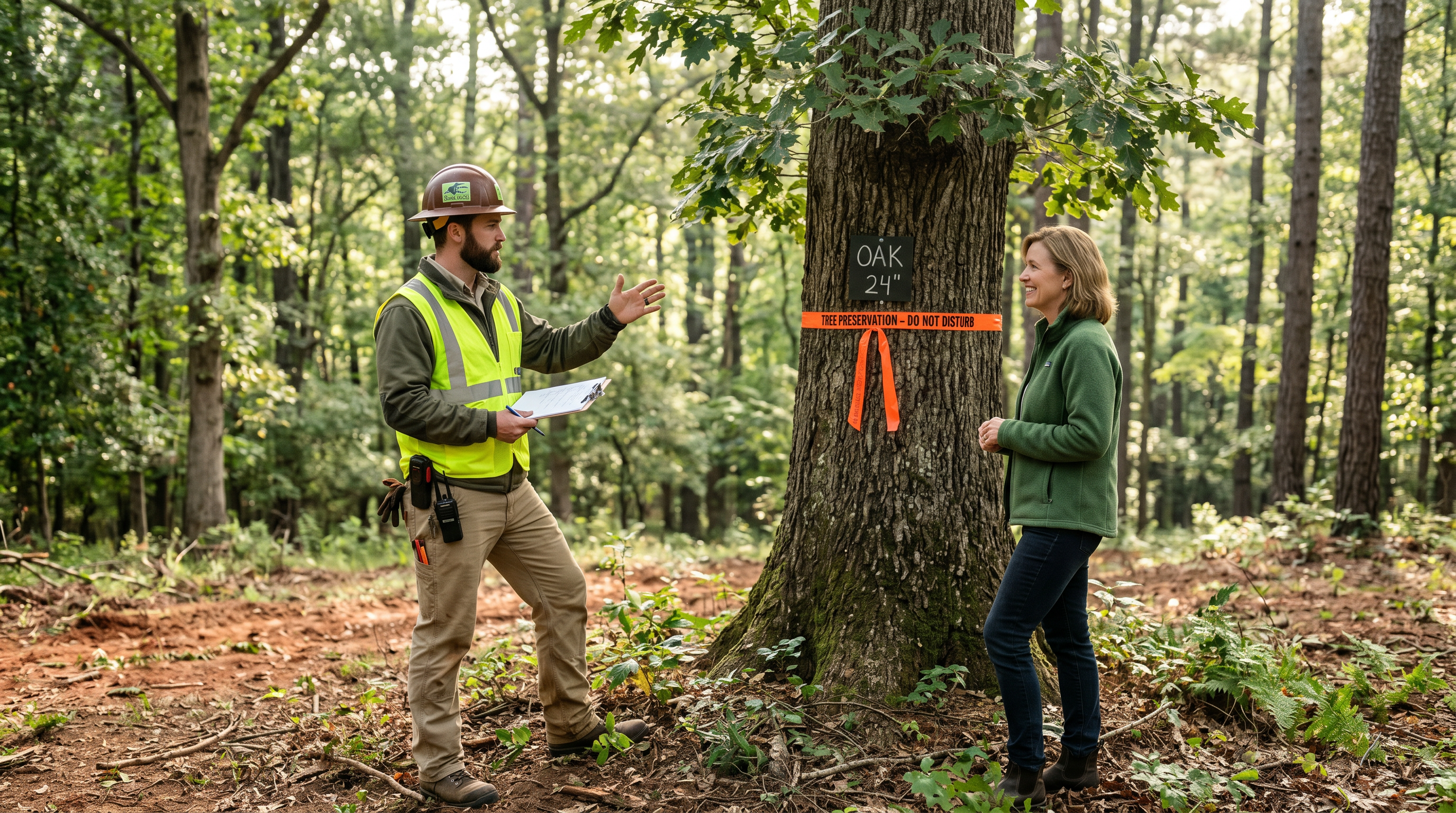
There are times when we really want to save a legacy tree. Whether it’s possible depends on the Critical Root Zone (CRZ). A general rule of thumb is a radius of one foot for every inch of the trunk's diameter, though NC State extension research suggests 1.25 feet or more per inch is a safer bet for tree health. If you have a tree with a 20-inch diameter and the wall is planned for 10 feet away, you are well within the danger zone.
Trimming the roots on just the wall-side is rarely a good solution. Roots act as the guy-wires for the tree. In a heavy Raleigh storm, a tree with its "anchor" roots cut on one side is prone to blowing over. If the tree is already a source of concern, choosing hazardous tree removal is usually the smarter long-term play for your property's safety.
The logistics of removing a tree behind an existing wall
If you have an existing wall that is already failing because of a tree, you have to move carefully. In steeper residential areas like Chapel Hill or Garner, a tree might be the only thing providing stability to a bank. When we remove a tree from a steep slope, we have to account for immediate erosion control. It is important to note that removing the tree won't fix a wall that has already tilted, but it will stop the root expansion from making it worse.
Stump grinding near wall footers and drainage
We often get asked if the vibration from stump grinding will knock a wall down. While it is a valid concern for older masonry or dry-stack stone, we use precision methods and maneuverable grinders to minimize ground impact. More importantly, leaving a stump to rot behind a wall is a recipe for disaster. The resulting void will eventually cause the soil to settle, which can pull the wall backward or cause the base to sink.
How to coordinate with your hardscape contractor
If you are planning a wall in Cary or any surrounding Wake County town, timing the tree work correctly is essential. We recommend this order of operations:
- Mark the footprint: Have your wall builder mark exactly where the footer and the geogrid reinforcement will sit.
- Consultation: Text photos of the marked area to us at 919-523-8516. We can identify which trees threaten the structural integrity of the project.
- Removal: We perform the tree removal and grind stumps to the depth required for the wall builder to have a clean, stable foundation.
- Hardscape build: The wall contractor installs the drainage and blocks on soil that won't shift or settle.
If you have a tree touching power lines or leaning dangerously near your property lines after a storm, stay clear and call us immediately. We pride ourselves on leaving Triangle yards cleaner than we found them, ensuring your new wall project starts on solid ground without any hidden structural risks.
Share
You might also like