How to get rid of tree of heaven NC: identification and expert removal
How to get rid of tree of heaven NC: identification and expert removal
If you have noticed a tree in your yard that seems to grow multiple feet every season and smells like rancid peanut butter when you brush against it, you are likely dealing with the tree of heaven (Ailanthus altissima). This invasive species is one of the most stubborn plants we encounter in the Raleigh and Wake Forest area. I have seen homeowners try to handle it like a normal oak or pine, only to find their property overrun with new sprouts a month later. Learning how to get rid of tree of heaven in NC requires a specific biological strategy; if you just cut it down, you are essentially kicking a hornet's nest.
To effectively get rid of tree of heaven, you must apply a systemic herbicide treatment—such as a basal bark or hack-and-squirt method—between mid-July and the onset of fall color. Cutting the tree before the root system is neutralized triggers a survival mechanism called root suckering, where the tree sends up dozens of new shoots from roots up to 50 feet away.
What is the tree of heaven and why is it invading the Triangle?
Tree of heaven is a master colonizer. It thrives in the disturbed clay soils common across the NC Triangle. You will find it hugging the edges of woods, growing along property lines in Raleigh and Wake Forest, or pushing through gaps in driveways. I have stood on properties where a single parent tree was surrounded by a literal army of clones, all connected underground.
This tree is a threat to our local ecosystem because of allelopathy. It produces a chemical called ailanthone in its bark and roots that acts as a localized herbicide, preventing native North Carolina plants from growing nearby. Because it grows much faster than native hardwoods or loblolly pines in disturbed sites, it quickly steals the sunlight and space from the trees we actually want to keep. It turns a diverse wooded border into a thicket where nothing else can survive.
The spotted lanternfly connection: why Raleigh homeowners should be concerned
The urgency to manage Ailanthus has grown recently. This tree is the primary host for the spotted lanternfly (SLF), an invasive pest that causes massive agricultural damage. As of early 2026, the North Carolina Department of Agriculture has documented established populations of SLF in Piedmont counties like Forsyth, Rockingham, and Davidson. While it has not been officially detected in Wake, Durham, or Orange counties yet, the threat is moving closer.
Removing tree of heaven hosts on your property is a proactive way to reduce the risk of attracting these pests to your yard. Reducing the host population is a scientifically sound way to protect your long-term property value and the health of our local fruit-bearing trees and landscape plants.
The gorgon effect: why cutting this tree makes it multiply
I call it the Gorgon effect: cut off one trunk, and ten more grow back. When a homeowner in Knightdale or Garner takes a chainsaw to an Ailanthus without treating it first, they are unintentionally signaling the tree to expand. The tree stores energy in a massive horizontal root system. When the main leader dies, that energy triggers dormant buds in the roots to explode into growth.
This is why we tell our customers to never cut an Ailanthus until the root system has been properly neutralized. Professional systemic applications ensure the herbicide travels throughout the entire root network, stopping the suckering response before we ever start the saws.
Identifying tree of heaven vs. native look-alikes
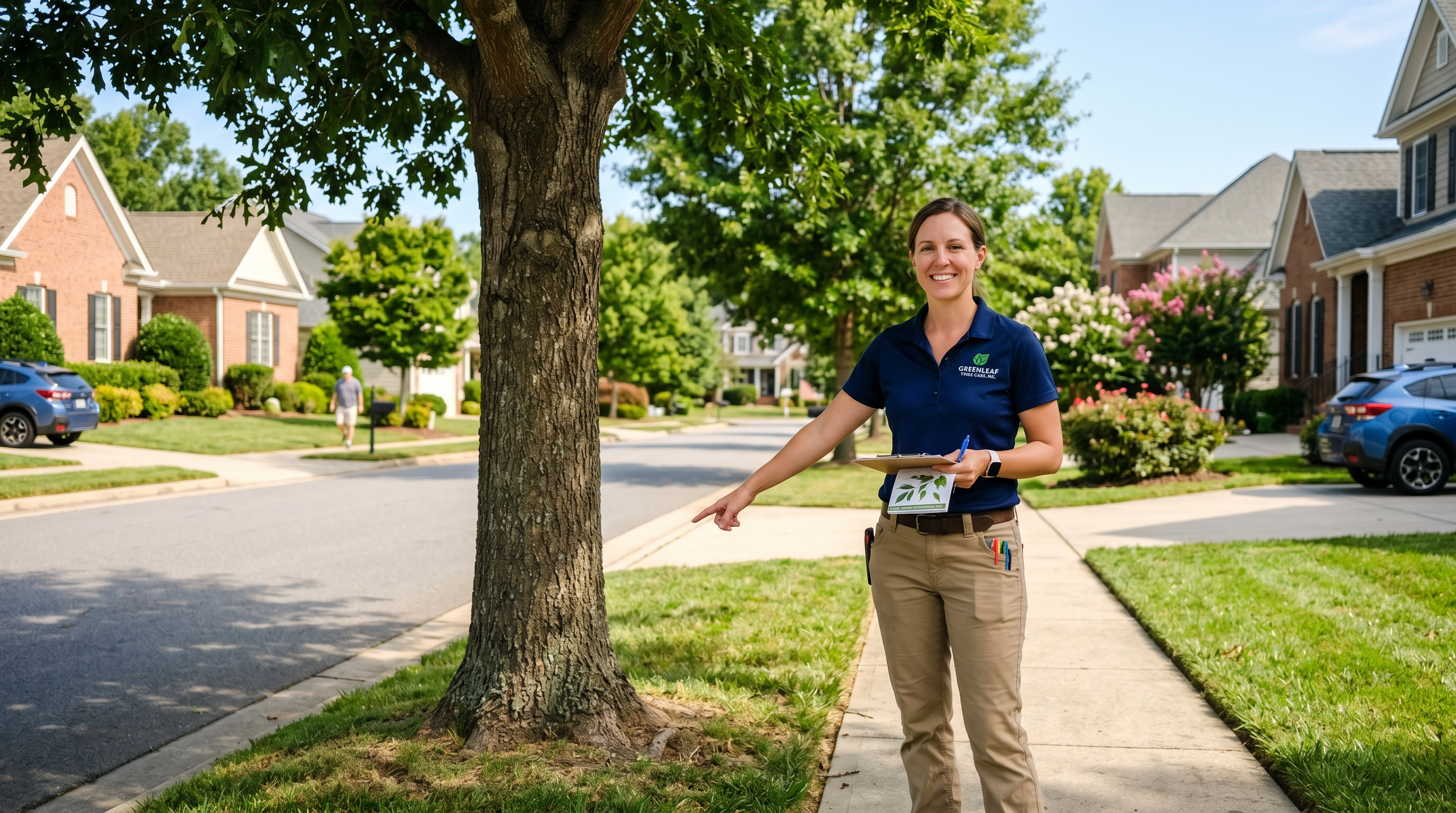
Getting the identification wrong might mean accidentally removing a valuable native tree. Tree of heaven looks very much like staghorn sumac or black walnut to the untrained eye. Here are the tests we use to confirm we are looking at an Ailanthus:
- The scent: If you crush a leaf or scrape the twig, it smells distinctly like burnt or rancid peanut butter. Sumac and walnut have much cleaner, more organic scents.
- The leaf scars: Look at where a leaf has fallen off a twig. Tree of heaven leaves a giant, heart-shaped or V-shaped scar that looks like a shield.
- The leaflet edges: Ailanthus leaflets are smooth except for one or two small bumps (basal glands) at the bottom. Black walnut leaflets are serrated like a saw blade all the way around.
If you aren't sure, snap a few clear photos of the leaves and bark and text them to us at 919-523-8516. We can usually tell you what you are dealing with within minutes.
Structural risks to foundations and driveways
Ailanthus is not just an ecological nuisance; it can become a structural problem. These trees are incredibly aggressive at finding moisture and will exploit any crack in asphalt or concrete. If a tree of heaven is allowed to grow right next to your home or garage, those expanding roots can exert pressure that damages foundations or lifts sidewalk slabs. In tight urban yards in Raleigh or Apex, we often treat these as hazardous tree removals because the rapid growth can lead to weaker stems that warrant professional assessment if they are leaning over a roof or driveway.
The professional way to kill tree of heaven for good
To truly get rid of tree of heaven in NC, you have to follow a specific process. We align our strategies with research from NC State Extension to ensure the root system is actually dead. Here is how we handle it:
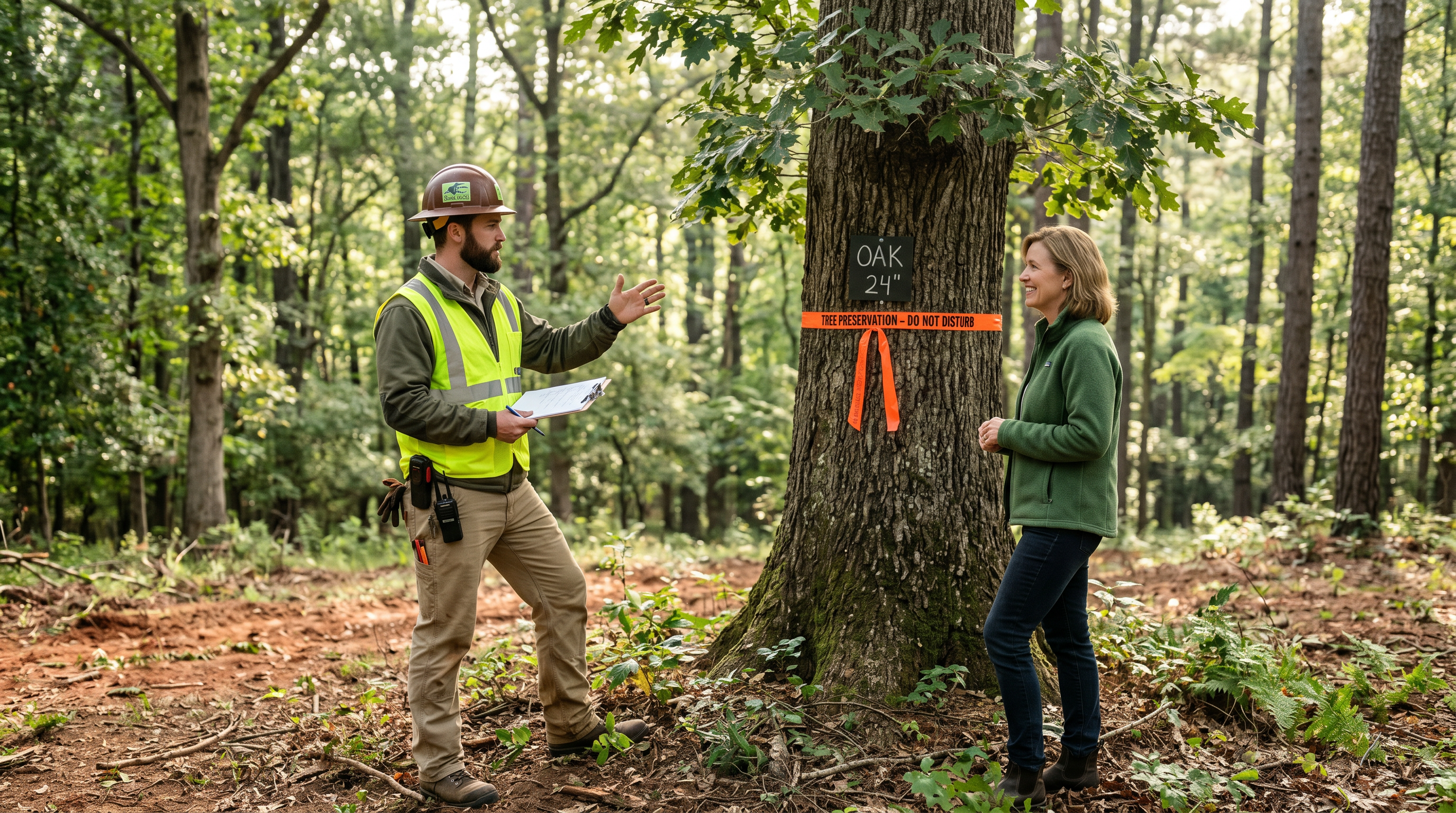
- Identification and mapping: We find the parent trees and all the smaller suckers hiding in your undergrowth.
- Systemic treatment: The best window is mid-July through mid-October. This is when the tree is pulling nutrients down into its roots for winter survival. We use targeted methods like basal bark or hack-and-squirt to get the treatment where it belongs.
- The waiting period: We usually wait about 30 days. We need to see signs of dieback to know for sure the root system has absorbed the chemical.
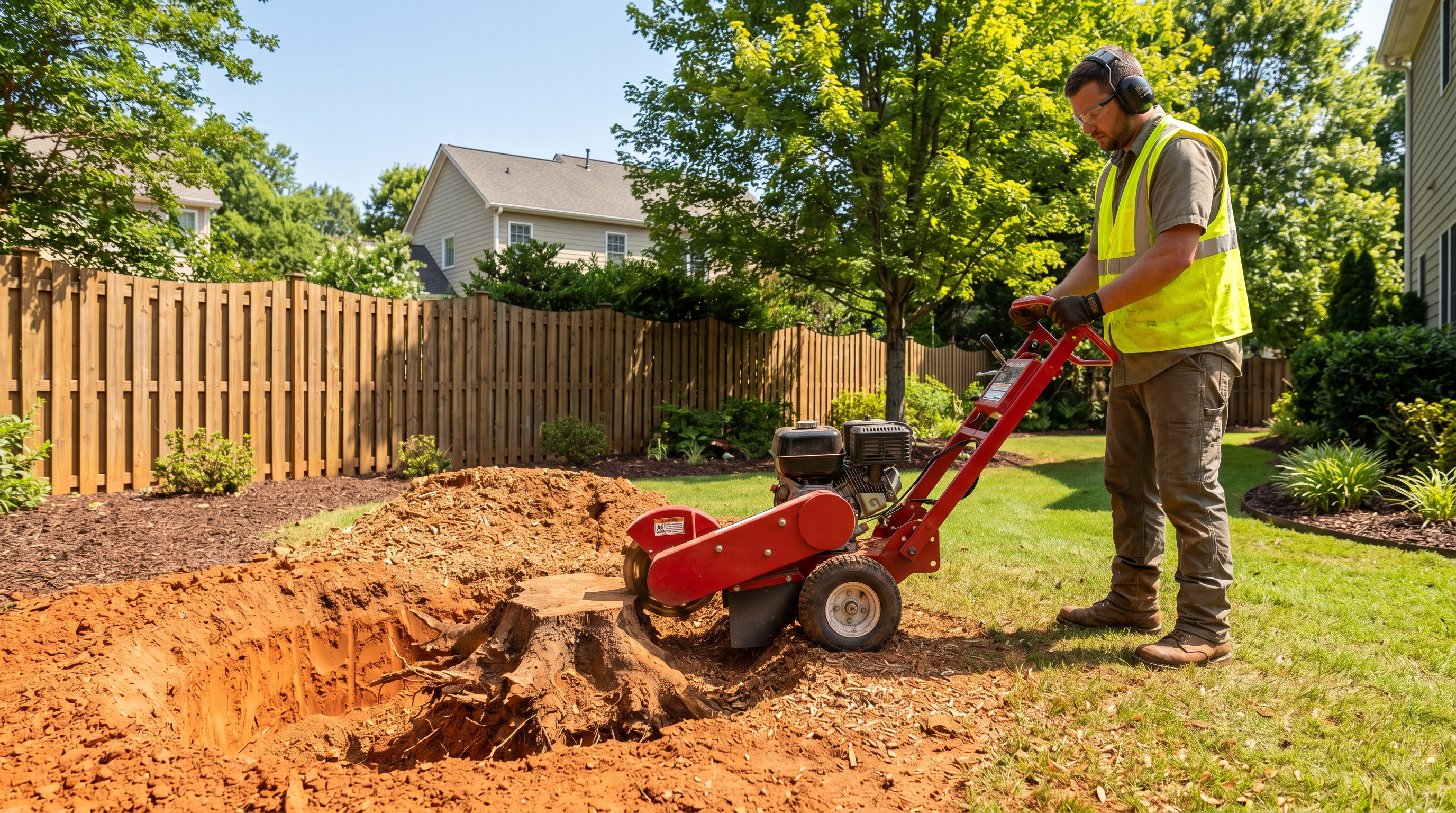
- Removal: Once the tree is neutralized, we perform a standard tree removal. For larger trees, stump grinding helps clear the area for replanting.
Protecting your property and your health
I always warn people to be careful when handling these trees. The sap can cause contact dermatitis (skin irritation), and there have even been rare cases of heart irritation from sap entering open cuts. This is why our crews wear full protection. We also pay special attention to utility lines; these trees often pop up on lot edges where power lines run. If a limb is touching a line, stay back and call your utility company first. We always ensure the site is safe before we begin our work.
Removing a tree of heaven is an investment in your property's future. It stops the spread of soil toxins and removes a major lure for the spotted lanternfly. If you have spotted this fast-grower near your woods or fence line, don't wait for it to take over. Reach out for a professional evaluation today.
You can call or text Wake Tree Removal at 919-523-8516 for a quick estimate or identification. We are here to help you get rid of tree of heaven in NC the right way.
Share
You might also like