Tree removal near irrigation systems and invisible pet fences
Tree removal near irrigation systems and invisible pet fences
Tree removal near irrigation systems and invisible pet fences is one of the most common concerns we hear from homeowners in neighborhoods across Wake Forest, Cary, and North Raleigh. You know that dead oak needs to come down, but you can’t help but think about the hundreds—or thousands—of dollars buried right under its canopy. Irrigation pipes and invisible dog fences aren’t just yard features; they’re expensive investments that are notoriously easy to break during a standard tree job.
The reality is that tree removal and stump grinding can be done safely near these systems, but it isn't an accident. Because these are private lines, they aren't covered by public utility markers. That means the homeowner and the tree crew have to work as a team to map out the yard before the first bypass is made. At Wake Tree Removal, we use a proactive mitigation strategy—including hand-probing and heavy-duty ground mats—to significantly reduce the risk of damage to your backyard technology.
Why 811 does not mark your sprinklers or dog fences
Most homeowners know the "call before you dig" rule. While North Carolina 811 is a required step for locating public water, gas, and power lines, many are surprised to find that the service does not cover private systems. Your sprinkler heads, the poly-pipe laterals that feed them, and the thin wire for your pet fence are your responsibility to identify and mark per the NC Underground Utilities Act.
Public water lines are often buried several feet deep, safely out of reach of most root work. However, private irrigation pipes in the Triangle often have only 8 to 12 inches of soil cover. Invisible fence wires are even more vulnerable, resting just 3 to 5 inches below the turf. These shallow depths mean that standard equipment movement or a spinning grinder wheel can find them in seconds if their location is a mystery.
Risk factors: Machinery weight and the grinding wheel
When we perform stump grinding and removal , your underground systems face two main threats. The first is pure weight. A large wood chipper or a stump grinder is heavy. In typical Triangle soil conditions, that weight can lead to compaction that pinches or cracks a shallow poly-pipe, particularly if the ground is soft after a typical North Carolina rainstorm.
The second risk is the cutting wheel. A stump grinder is designed to process wood and soil up to 12 inches below the grade. Since NC irrigation piping is often buried at that same depth, the overlap is direct. If a grinder wheel hits a plastic pipe, it will sever it instantly. For invisible dog fences, the wire is so fine that even dragging a heavy log across the yard or the stabilizer feet of a bucket truck can sometimes cause a break.
Identifying the danger zones in your yard
Knowing where the biggest risks are helps us plan a safer route. These areas are often the most complex to navigate or expensive to repair:
- Valve boxes: These boxes contain the manifolds and electrical solenoids for your zones. They are high-density hubs for both pipes and wires.
- Backflow preventers: This is the starting point of your system and usually features the most rigid, heavy-duty piping.
- Sprinkler heads near the tree trunk: As trees grow, their roots often lift or grow around irrigation lines. If a head is right next to a stump, the roots we need to grind are almost certainly tangled with the pipe.
- The dog fence perimeter: These wires usually follow driveways or property lines—the exact paths our equipment needs to take to reach the backyard.
How to mark your yard before the tree crew arrives
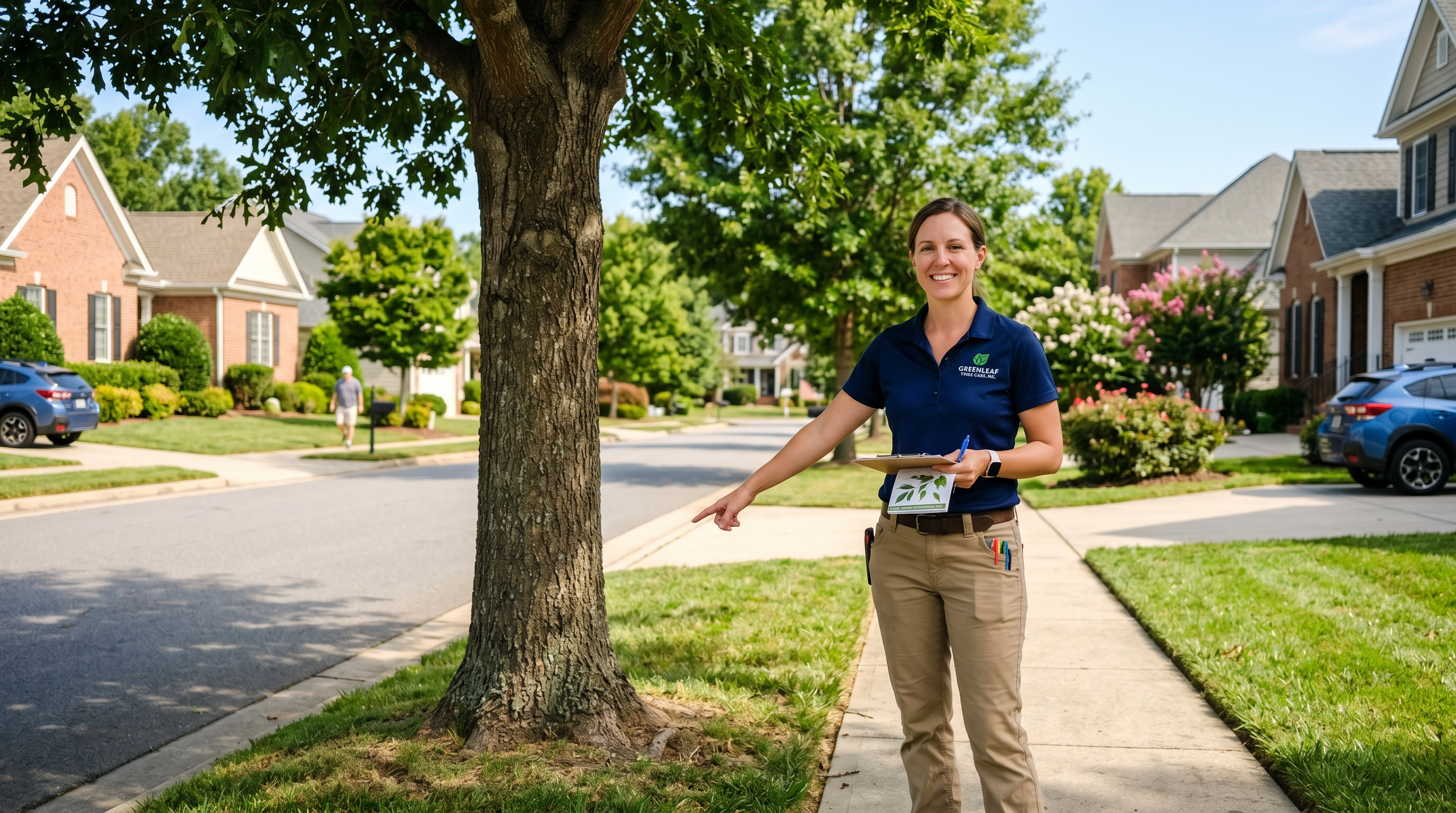
We encourage homeowners in the Cary area and surrounding towns to do some recon before we arrive. Visual markers are the best way to keep a crew away from a fragile line.
- Run your system: Turn on your irrigation zones one by one and place a flag at every head near the work area.
- Use landscape paint: Use orange flags or purple spray paint (the industry standard for irrigation) to mark the general path of your pipes.
- Trace the fence: Use a wire tracer or a pet collar to find the invisible fence signal. Mark the wire's path with red flags or tape.
- Share photos: Taking photos of your marked yard and sending them to your estimator allows us to plan for specialized mats or smaller equipment before we show up on site.
Technical precision: How we work around located lines
Once the lines are identified, we don't just hope for the best. We use high-density ground protection mats to act as a temporary floor. This distributes the massive weight of our equipment across a wider surface area, preventing the soil from compacting and crushing the pipes underneath. It also keeps your lawn looking much better once the job is done.
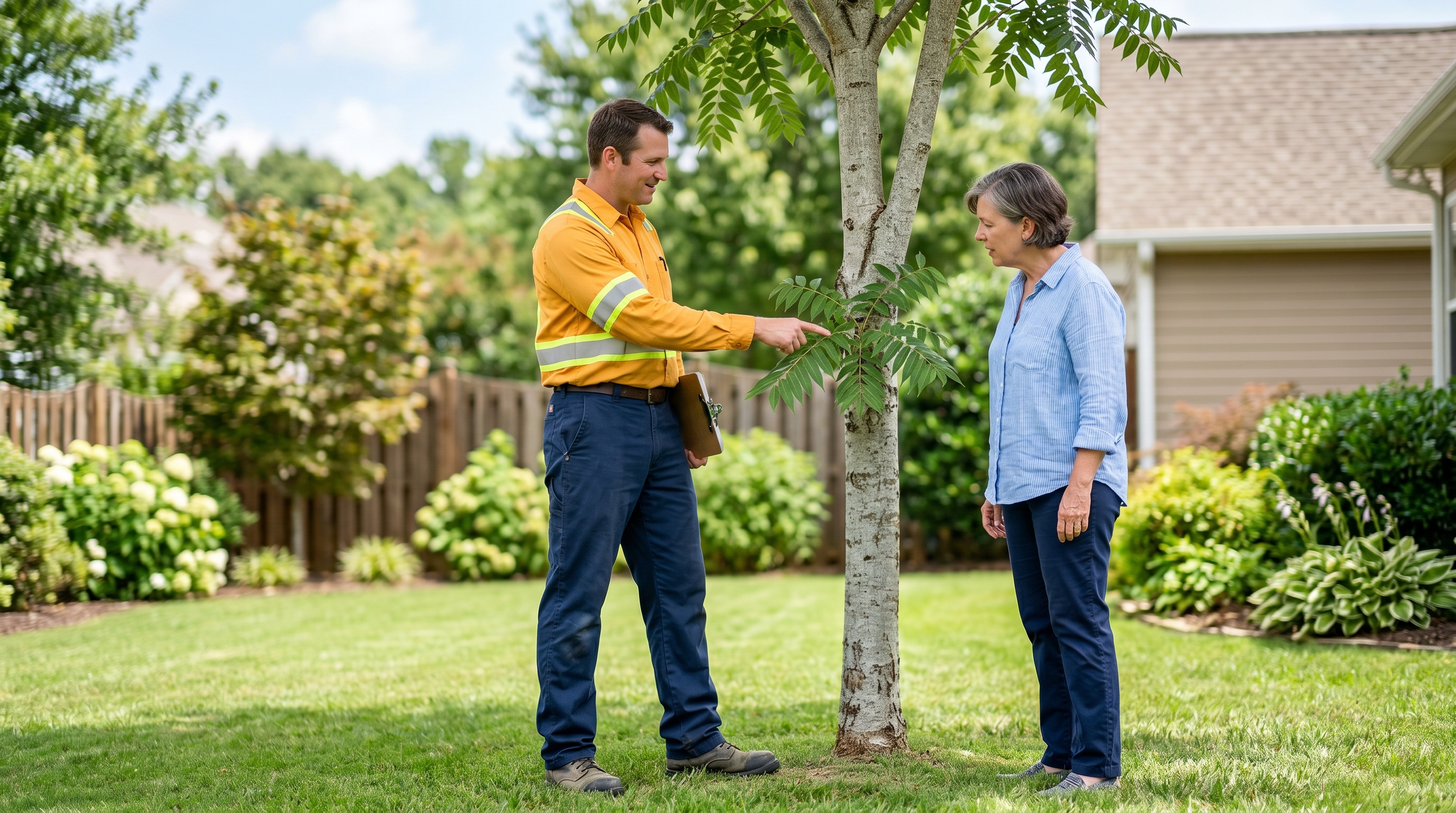
Near a marked valve or head, we often switch to hand-probing. By using a metal probe to manually check the soil, we can feel for the resistance of a pipe before any machinery gets close. If a stump is too close to a critical manifold, we might grind in tiny, controlled sections or adjust the angle of the wheel to leave a safety buffer. It takes more time, but it’s much faster than a repair bill.
What happens if a line is hit?
We aim for zero damage, but underground work always carries some level of risk. Sometimes roots and irrigation lines occupy the same literal space. If a root has grown completely around a pipe, it may be impossible to remove the stump without making contact. In these rare cases, our policy is simple: immediate transparency.
Most simple irrigation nicks or dog fence breaks are straightforward to fix. Standard poly-pipes can be spliced and heads replaced without much downtime. We discuss these possibilities with you during the estimate so you know exactly where the high-risk spots are. Our goal is to avoid damage entirely, but if something happens, we’ll communicate it instantly and work with you to find a solution.
Questions to ask your tree service about property protection
Not every crew treats a residential yard with the same care. If you're shopping for a tree service in the Raleigh area, ask these questions before signing a contract:
- Do you use ground mats to protect my grass and shallow pipes from your equipment?
- How do you handle grinding when you know an irrigation line is nearby?
- Are you willing to hand-probe or hand-dig near my valve boxes before you start the machine?
- Wait, if a tree or limb is touching an active power line, please stay back and call the utility company first. We can help once the high-voltage lines are cleared.
Your yard’s technology is a big investment. If you have hazardous trees or stumps near your infrastructure, we are here to provide a professional, careful assessment. You can contact us for a free estimate to discuss a protected plan for your property.
Share
You might also like