Tree removal for fence installation in Raleigh and Wake Forest
Tree removal for fence installation in Raleigh and Wake Forest
If you've recently signed a contract with a fence company in Raleigh or Wake Forest, you likely saw a clause in the fine print about "clearing the line." Most homeowners assume this means picking up a few stray branches. In reality, fence crews usually expect a clear, three-foot-wide working path centered exactly where the fence will go. When homeowners don't account for tree removal for fence installation in Raleigh , the project often grinds to a halt before the first post hole is even dug.
I see this scenario play out across the Triangle far too often. A crew arrives, realizes their panels won't sit straight because of a massive trunk flare, and they pack up for their next job. It's a massive headache for everyone involved. Getting the site preparation right—including tree removal and stump grinding—is what keeps your project on schedule and your yard looking like it was handled by pros.
The "clear path" requirement: why fence contractors won't touch your trees
It is important to remember that fence installers are experts in structures, not arboriculture. Most don't carry the specific insurance or heavy equipment required to safely drop a tree or grind a massive stump. Their tools are built for digging narrow post holes, not for excavating large root systems or hauling away tons of hardwood.
To build a fence that is actually straight, the crew needs room to work. They typically require at least three feet of horizontal space. This allows them to string lines for the posts without fighting hidden stumps or thick underbrush. If your property line is currently a wooded perimeter or has years of volunteer growth, a professional tree removal service is usually your first phone call.
Assessing the line: when a tree is too close to the planned fence
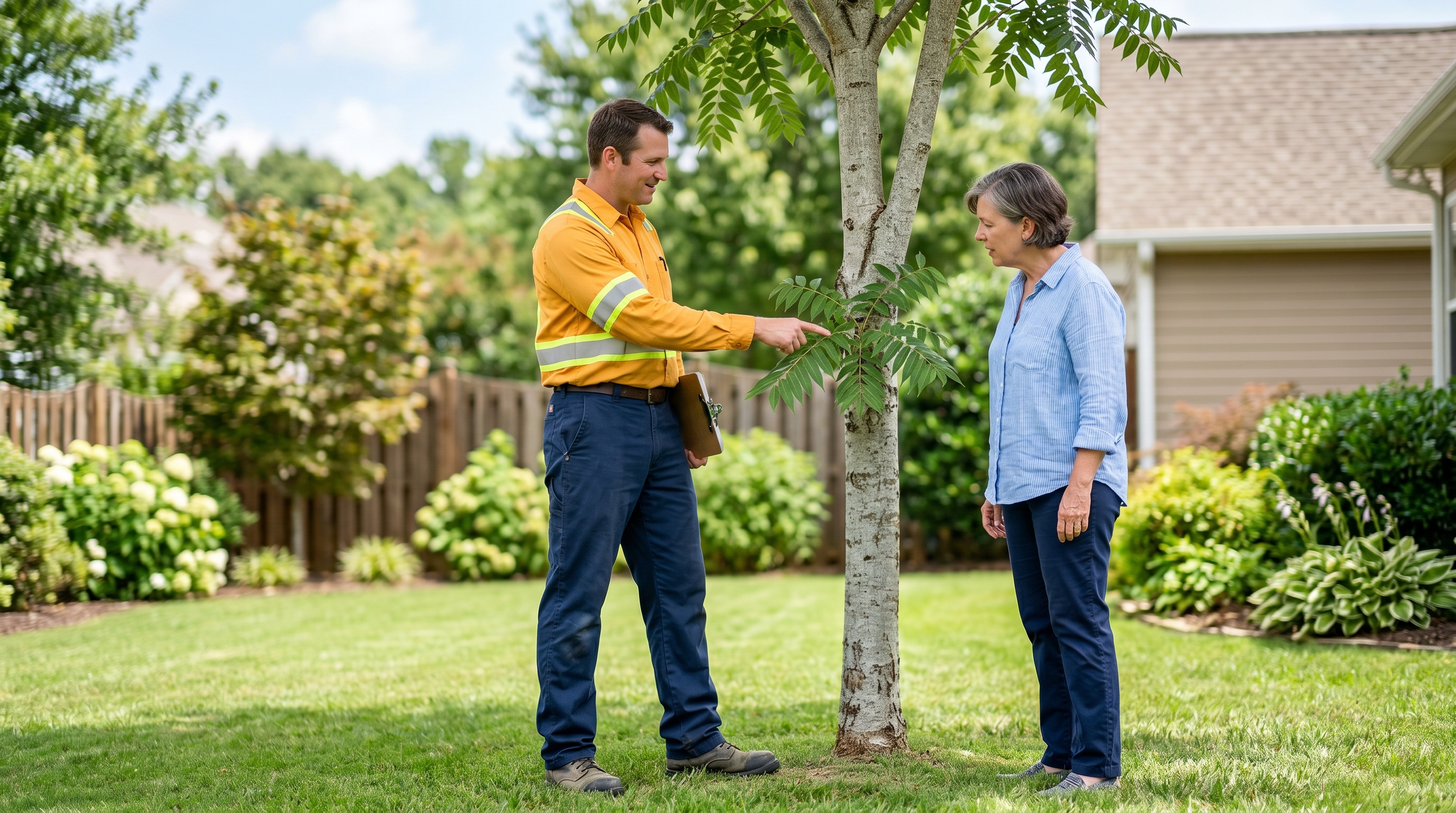
How do you tell if a tree is truly in the way? Sometimes it's obvious, but often it’s a matter of inches. During a site assessment, our crew looks at the trunk flare first. This is the wider part of the tree where the trunk meets the roots. If the trunk flare or the "critical root zone" intersects the planned fence line, a straight install is nearly impossible. The panels would have to zigzag, which looks messy and can even trigger HOA violations in neighborhoods throughout Cary, Apex, and Raleigh.
We also check the species. Many property edges in Wake County are packed with invasive "volunteers" like Chinese privet or fast-growing sweetgum saplings. They might look like small bushes now, but they’ll eventually warp your panels or lift your fence posts out of the ground. Removing them before the fence goes up is much cheaper than a repair bill five years from now.
The invisible obstacle: why stump grinding is non-negotiable
Cutting a tree down is only half the battle. For a fence project, professional stump grinding is essential. Residential fence posts typically need to be buried 24 to 36 inches deep to withstand a North Carolina summer storm. If a post hole needs to go where a stump currently sits, the installer is stuck.
Leaving a stump behind is also a recipe for future trouble. Rotting stumps attract termites and carpenter ants. Furthermore, species common in our area often try to regrow, with new shoots pushing up through your new panels. We suggest grinding stumps at least 12 inches below grade to ensure the fence crew has a clean, workable soil path for their posts.
Access strategy: removing trees before the fence becomes a barrier
The biggest mistake I see is homeowners waiting until after a fence is installed to remove a tree. Access is everything. While we can work in tight spots, it is always easier—and more budget-friendly—to bring in equipment before the yard is enclosed.
Once those gates and panels are up, we are often restricted from using chippers or stump grinders. That means more manual labor, which increases the time and cost for you. By clearing the line beforehand, we can move debris efficiently and eliminate any risk of a falling limb accidentally damaging your brand-new structure. It's about protecting that investment from the start.
Protecting your investment: root damage and tree health
If you have a tree you want to keep that’s near the fence line, you’ve got to think about the roots. Most feeder roots are in the top 12 inches of soil. When a crew digs post holes every eight feet, they are essentially trenching through that tree's life support. Cutting structural roots can destabilize a tree or cause it to decline slowly over a few seasons.
Use the rule of thumb: try not to disturb the soil within a radius of 1.25 feet for every inch of the tree's trunk diameter. If your fence falls inside this zone, relocation or removal might be the only way to prevent a dead tree from falling on your new fence later. We can provide an arborist consultation to help you make that call.
Local rules and utility safety in the Triangle
There are some regional "hoops" to jump through. Raleigh requires a zoning permit for any new fence installation. Some municipalities in our area also have strict rules about clearing trees in protected buffers or conservation areas. It’s always smart to check with your local planning department or HOA first.
Safety is the other big one. In North Carolina, calling 811 is mandatory before any digging. However, 811 only marks public utility lines. Many subdivisions in Wake Forest, Knightdale, and Garner have private irrigation lines or landscape lighting. Those aren't on the city's maps. We take extra care during clearing to look for signs of these lines, but knowing your yard's layout beforehand can save a lot of trouble.
How to get a fast estimate for your fence line clearing
If your fence contractor has told you to "clear the path," don't panic. We handle these situations every week in Raleigh, Wake Forest, and the surrounding communities. The fastest way to get an answer is to text us photos of the area. Show us the trees in the path and the access point to the yard.
Our focus is on property protection and leaving your site ready for the next crew. Whether it's a dense thicket of privet or a single stubborn oak, we can get it cleared so your fence project stays on track. For a straightforward estimate and professional site preparation, contact us today. We are here to help homeowners in Raleigh, Durham, Chapel Hill, and beyond get their projects finished right.
Share
You might also like