Signs Your Tree Is Dead and How to Decide on Removal in Wake Forest and Raleigh
Signs Your Tree Is Dead and How to Decide on Removal in Wake Forest and Raleigh
Many homeowners in Wake Forest, Raleigh, Cary, and surrounding Triangle communities notice bare branches or thinning foliage and wonder whether the tree is dead and what to do next. Observing a few visible changes can help determine if professional help is warranted, especially during periods of drought stress common in the area.
Quick Answer: Key Signs Your Tree May Be Dead or Dying
If you are wondering whether your tree needs hazardous tree removal or just a little extra care, look for these common signs:
- Leafless Canopy: Absence of leaves or progressive canopy thinning during the spring and summer growing seasons.
- Brittle Branches: Limbs that snap easily or dead branches frequently falling to the ground.
- Bark Changes: Large sections of peeling bark or deep vertical cracks along the trunk.
- Failed Scratch Test: A gentle scratch on a small twig reveals dry, brown wood instead of living green tissue underneath.
- Fungal Growth: Mushrooms or fungi growing at the base of the trunk or on the main roots.
Local Factors That Accelerate Tree Decline in the Triangle
The Triangle region has experienced extended drought conditions that place extra stress on both native pines and hardwoods. Identifying the species can help set expectations:
- Loblolly Pines: Frequently die standing with bright brown needles still attached due to drought stress or pine beetle involvement.
- Willow Oaks and Red Maples: May show gradual outer-branch dieback as they struggle to draw enough water.
Newly planted or shallow-rooted trees suffer most, and strong winds can quickly turn brittle, drought-stressed limbs into hazards around fences or sheds. Soil conditions and recent storms compound these stresses, elevating the risk when dead trees are near structures.
Monitoring Versus Removal: Evaluating Structure and Proximity
Trees with only a few dead branches in the middle of a large yard can sometimes be monitored with annual professional checks. However, when more than half the canopy is affected, significant cracks appear, or the tree leans after heavy rain , an on-site professional evaluation becomes the safer choice.
An arborist looks at the full picture of structural defects, surrounding targets (homes, driveways, playgrounds), and weather exposure rather than applying a fixed seasonal calendar. Proximity matters—a dead pine far from buildings may be a lower priority than a declining oak directly over a garage.
What to Expect During a Professional Assessment
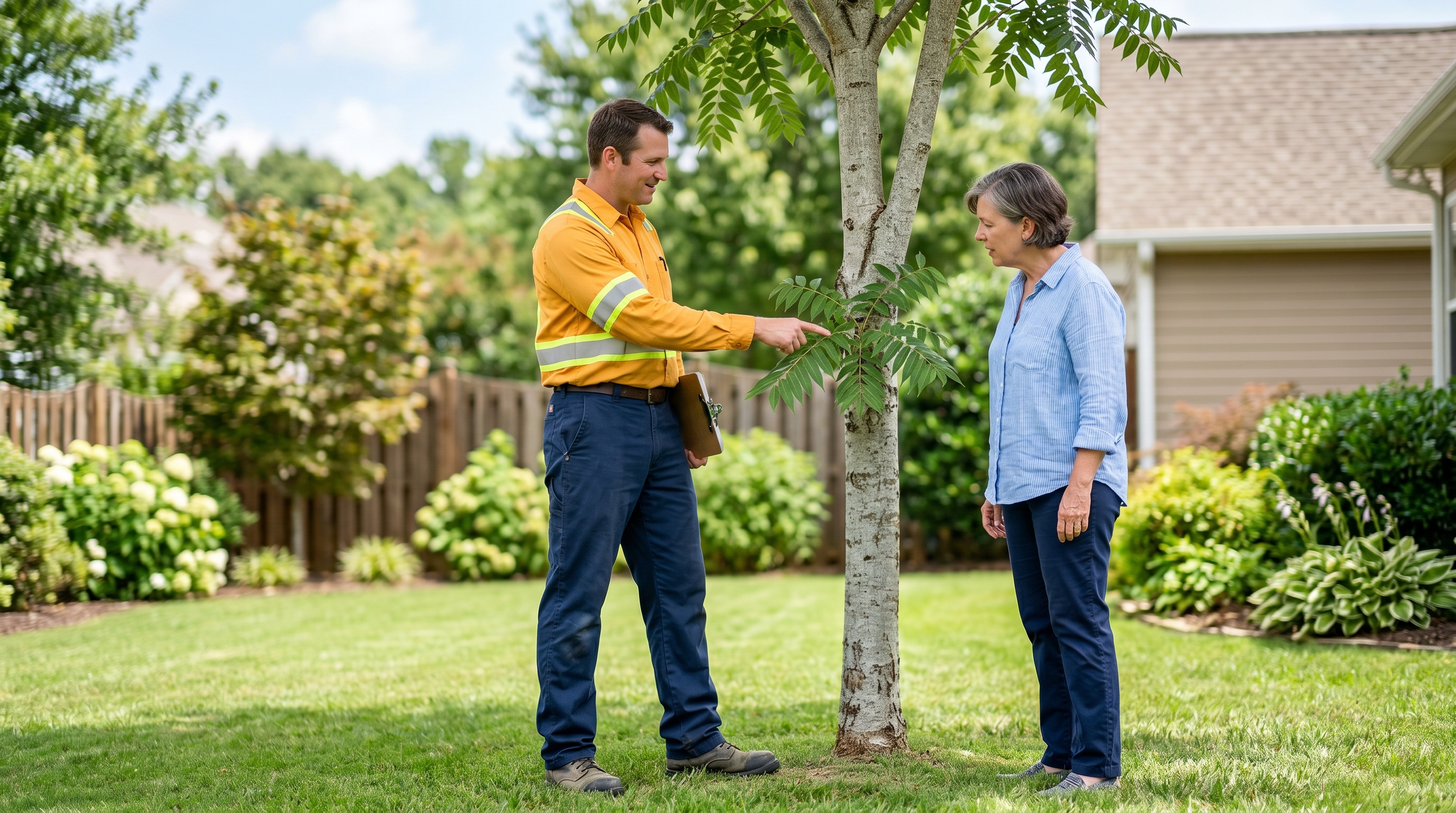
A standard assessment involves a systematic, visual evaluation of the tree's health and potential targets (following standard Level 1 or 2 review protocols). No digging or climbing is required for this initial inspection. The goal is to provide clear, reliable information so you can weigh your options without feeling pressured into immediate cutting.
Your free estimate will always include a clear discussion of site protection, equipment access routes, and the exact scope of cleanup .
Cleanup and Site Protection After Removal
After a dead tree is carefully dismantled, crews typically chip smaller limbs on site while hauling away the larger trunk sections. Fences, irrigation systems, and neighboring landscaping receive specific protective measures discussed before the job begins.
Whether you require standard removal or storm damage cleanup after a fallen limb, crews prioritize swift, safe work and a thoroughly raked, clean yard.
Utility Lines and Local Rules
Safety Warning: If any part of a declining tree is touching power lines, stay entirely clear and contact your local utility provider first. Removal crews will coordinate safely once the electrical hazard is addressed.
Permit requirements vary widely depending on whether you live within Wake Forest, Raleigh city limits, or a regulated HOA right-of-way. As a full-service tree provider , estimators will check these local rules during your quote.
Next Steps: Text a Photo or Request a Free Estimate
If you have noticed gradual canopy changes or recent brittle branches falling in your yard, the simplest next step is professional feedback. You do not have to guess whether the tree is safe.
Wake Tree Removal provides free, calm estimates across the Triangle area with upfront planning for property protection. Text us a clear photo of your tree for preliminary feedback, or call 919-523-8516 to schedule an on-site visit.
Contact us today to get started!
Share
You might also like