Crane tree removal in Raleigh and Wake Forest: How heavy machinery keeps your property safe
Crane tree removal in Raleigh and Wake Forest: How heavy machinery keeps your property safe
Many homeowners in the Raleigh area face the same tight spot: an 80-foot Loblolly pine or an old white oak dying right beside the house. Branches scrape the shingles. There is literally nowhere safe to drop even a small limb without hitting the roof, a fence, or the neighbor’s shed.
Standard climbing and rigging gets slow and risky in these spots. Sometimes it is just not possible. That is when we bring in a crane. Instead of piecemeal dropping, we lift big sections straight up and swing them clear over the house to a safe landing zone. The job that once dragged on for a full day often wraps in a few focused hours.
Quick answer: When is a crane the right call?
- Zero drop zones: No room anywhere to let limbs fall without hitting structures or landscaping.
- Dead or hollow trunks: Rotten wood can fail under a climber’s weight or during rigging. The crane holds everything while we cut.
- High-canopy locals: Tall Loblolly pines and mature oaks common around Raleigh and Wake Forest often need the extra reach and lift.
- Storm damage: Trees already leaning on roofs or tangled with others are safest handled from above.
How the process actually works on site
We start with a site visit. No crane shows up until we know the reach required, the weight of the sections we plan to cut, and exactly where the outriggers will sit. Overhead lines get checked first. If anything touches power lines, stay clear and call the utility company before any crew arrives.
Setup day, the crane usually parks in the driveway or on the street. We lay outrigger pads and mats to spread the load. A climber goes up, rigs a section, and the operator lifts once tension is set. The piece comes straight up instead of falling. It swings to a clear spot on the street or lawn where the ground crew processes it right away.
Protecting driveways, lawns, and tight yards
Homeowners always ask about damage. We use ground mats and pads as a bridge, and we talk through placement with you before wheels ever roll onto the surface. Driveway condition and the exact load matter though, so we cannot promise zero stress every time.
Even with that caveat, cranes usually do far less harm than the old way. Heavy logs do not get dropped and dragged across grass. Everything lifts vertically then sets down where it needs to go. That controlled movement is what keeps lawns and beds intact in zero-clearance Raleigh backyards.
Safety edge on decayed or hazardous trees
Some trees are simply unsafe to climb. A split trunk, big fungus at the base, or years of being dead means the wood can give without warning. In those cases the crane lets us work from above and keep the crew off the failing wood.
The same approach helps when a tree has already dropped onto a roof. Lifting sections off prevents extra crushing or tearing that happens if you try to cut and pull while the weight still rests on the shingles.
Crane versus traditional climbing: when each makes sense
Cranes are a specialized tool, not the default. Plenty of healthy trees with open ground space come down safely and more affordably with a good climbing crew. The difference shows up on the tougher jobs. What used to take a full day of rigging can finish in a few hours once the crane is in position. Less time on site means less disruption for you and the neighbors.
We look at every property as its own puzzle. If we can do the work safely without the crane, we say so. When reach or risk makes it the only responsible choice, we explain exactly why and what the plan involves before any equipment arrives.
Planning the job in the Triangle
Send wide-angle photos of the tree, the house, and where the driveway or street access runs. That usually tells us enough to decide whether a crane fits the space and reach. We handle jobs throughout Cary, Apex, Durham, and Garner and know the local quirks around equipment staging.
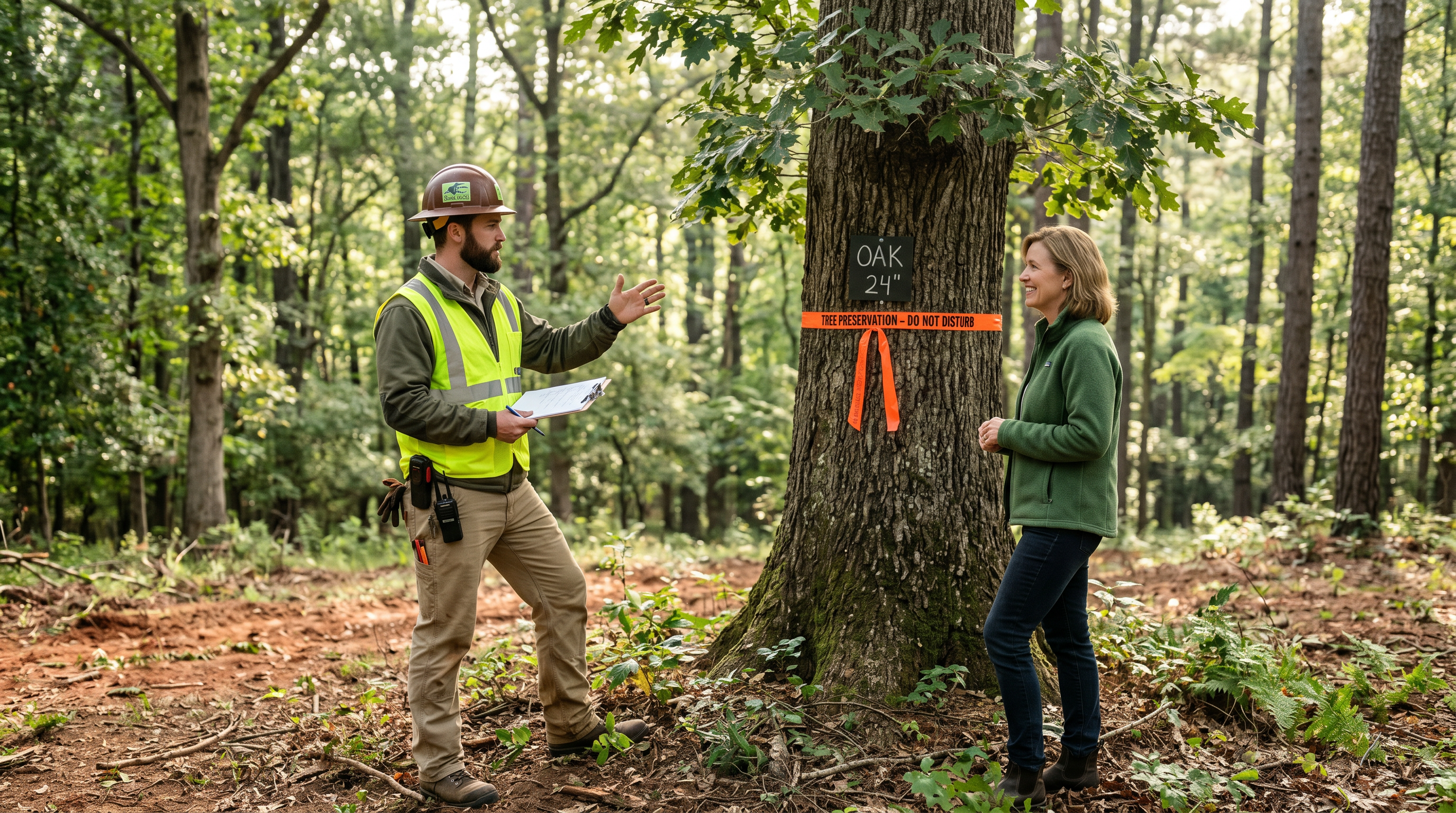
Raleigh requires tree impact permits for trees 8 inches or larger in many regulated areas. If the crane will sit on the street, right-of-way rules can also come into play. Check with the city or your HOA before we schedule so there are no surprises on the day.
Storms move fast here. If a tree looks ready to fail or limbs are already down, call early instead of waiting for the next big wind. For true emergencies we prioritize quick response. For planned large removals we take the time to map every step so the yard looks as clean when we leave as when we arrived.
Reach out for a no-pressure look
Got a big tree and no clear idea how anyone gets it down? Text or call 919-523-8516. Photos of the full scene and driveway access help us give you a realistic plan fast. You can also use the contact form if you want to describe the situation in more detail first. We focus on clear communication and real property protection every time we work in Raleigh and Wake Forest.
Share
You might also like